Showing posts with label Pieces Of My Mind. Show all posts

Thursday, January 1, 2015

2014 - The Year in Reading & the Best Books of the Year

So! Here we are, back to the Annual Megalomaniac Festival, starring yours truly as the emcee for the third year in a row – not that there aren’t any contenders for the position but hey, this is my moment & I say what I want.

Well, as the title may have suggested, this is about my reading exploits in the past year & boy, were there some to tell about. To start with, I took part in a couple of reading challenges – the Brunch Book Challenge (24 books or more in 2014) & the usual Goodreads Annual Reading Challenge. Yeah, the latter’s the one in which you set an impossibly low target for yourself & then pat your own back for accomplishing it well in time. (For the record, it was 200 days. The Brunch one was done in 100. But hey, who’s counting?)

I also attended three literature fests this year – KALAM (Kolkata Annual Literary Meet), Litomania (one on Indian popular fiction in my college campus) & the Times Literary Carnival (in Mumbai – best time I’ve had at a LitFest till date), besides finally making it to the Kolkata International Book Fair, the third largest in the world. Jolly good time that, but not so when it came to book prices. Still, one should go there only for the sheer scale of it – it’s simply overwhelming.

Then there was the small matter of participating in the #387ShortStory Challenge, which entailed reading a short story by a new author every day. Though it started last year in December, I valiantly carried on till mid-June before I ran out of stories. The guy who started it - @vivekisms – was still at it last time I checked his blog & since he’s awesome, I recommend you follow him if you love books. In the meantime, all that short fiction catapulted me back into the top 1% of readers on Pocket, so that’s another feather in my cap.

Feathers in my cap remind me – hell, my photo was published in HT Brunch too! They called me their ‘top reader’ & all in their Reading Special Issue, which was nice but the best part were the books they sent me over the year & now I’ve even made it to their top 24 readers of the year & I’m getting a reading hamper from them & I’m just so amazing – yeah, kinda makes you jealous, no?

Of course, all this self-aggrandizement would be incomplete without telling how I found a new literary fraternity in this wonderful book review blog called Between The Lines, run by my handler @bassyc. For those who wonder why being BTL is a great place to be, you can check out my Instagram feed (@thebongone).

Now that we are done with all the other stuff, let’s talk about the books, shall we? Well, unlike last year, I did not pick up a single graphic novel or novella to boost my reading stats so all I read were proper books. I’d say this was the year of non-fiction, which was mostly due to my endeavour to expand my horizons through my college library, which has a non-existent shelf titled ‘Fiction’. (Biggest mystery however is that how a copy of The Bourne Ultimatum found its way in there.) My pace too slowed down since term began in mid-August, as I managed about 4 books a month after that. Pathetic, I know.

Sure, there were some highlights – a couple of firsts, actually. I read a Bengali novel this year (yeah, could you please applaud a bit louder there?) called Chander Pahaar (Mountain of the Moon) by Bibhutibhushan Bandopadhyay, a classic by all means. And then there was a collection of poetry too, which made it to THE LIST & so I will talk about it in a while.

And the time is now! You can of course check out the previous specimens of my narcissistic tendencies on this blog itself, so spare me the trouble of any more links. And I won’t keep you waiting anymore – here you have my list of the ten best books I have read in 2014, in chronological order:

Beastly Tales from Here & There
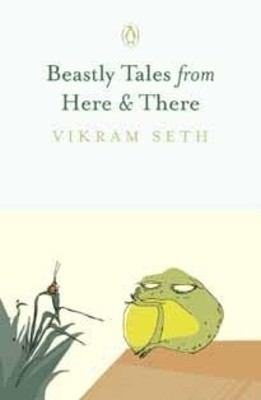

Author: Vikram Seth

Publisher: Penguin Books India [Paperback]

First Published: 1991

Summary: From the impish to the brilliantly comic, Vikram Seth's animal fables in verse can (like Diwali sweets) be enjoyed by young and old alike. Familiar characters in a new and magical form, such as the greedy crocodile who was outwitted by the monkey or the steady tortoise who out-ran the hare, here take their place beside a newly minted gallery of characters and creatures who are quirky, comical and always fun. Of the ten tales told here, two come from India, two from China, two from Greece, two from Ukraine, and two, as the author puts it "came directly to me from the Land of Gup." This is a book that displays astonishing versatility of the poet who gave us The Golden Gate and All You Who Sleep Tonight. The flair and delight of Beastly Tales from Here and There is proof that Vikram Seth can try on most unusual clothes without in the least losing his unique poetic identity.

Review: I was attending my final event at KALAM & Vikram Seth read an entire poem from this collection - I instantly fell in love with it. Though he wrote this for children, I bet you won’t be able to resist the charm of this wonderful collection of poetry. Beauty lies in simplicity & this is a gem by all means.

For those interested, you can read my attempt to review this in verse.

Delicacy
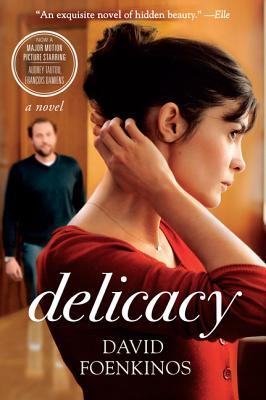

Author: David Foenkinos [translated from the French by Bruce Benderson]

Publisher: Harper Perennial [eBook]

First Published: 2009

Summary: Natalie and François are the perfect couple, and perfectly happy. But after François dies suddenly, only seven years into their still blissful marriage, the widowed Natalie erects a fortress around her emotions into which no one can gain access. Until the most unlikely candidate appears: Markus, Natalie’s Swedish, geeky, and unassuming coworker.

Review: I don’t read a lot of romance but this one’s up there with the very best I’ve encountered. Quite a page-turner too - finished it within a day itself. This heart-warming tale of finding love in the unlikeliest of places will leave you enchanted. Perhaps the most enjoyable book I’ve read in 2014.

Moneyball: The Art of Winning an Unfair Game


Author: Michael Lewis

Publisher: W.W. Norton & Company [Paperback]

First Published: 2002

Summary: Billy Beane, general manager of MLB's Oakland A's and protagonist of Michael Lewis's Moneyball, had a problem: how to win in the Major Leagues with a budget that's smaller than that of nearly every other team. Conventional wisdom long held that big name, highly athletic hitters and young pitchers with rocket arms were the ticket to success. But Beane and his staff, buoyed by massive amounts of carefully interpreted statistical data, believed that wins could be had by more affordable methods such as hitters with high on-base percentage and pitchers who get lots of ground outs. Given this information and a tight budget, Beane defied tradition and his own scouting department to build winning teams of young affordable players and inexpensive castoff veterans.

Lewis was in the room with the A's top management as they spent the summer of 2002 adding and subtracting players and he provides outstanding play-by-play. In the June player draft, Beane acquired nearly every prospect he coveted (few of whom were coveted by other teams) and at the July trading deadline he engaged in a tense battle of nerves to acquire a lefty reliever. Besides being one of the most insider accounts ever written about baseball, Moneyball is populated with fascinating characters. We meet Jeremy Brown, an overweight college catcher who most teams project to be a 15th round draft pick (Beane takes him in the first). Sidearm pitcher Chad Bradford is plucked from the White Sox triple-A club to be a key set-up man and catcher Scott Hatteberg is rebuilt as a first baseman. But the most interesting character is Beane himself. A speedy athletic can't-miss prospect who somehow missed, Beane reinvents himself as a front-office guru, relying on players completely unlike, say, Billy Beane. Lewis, one of the top nonfiction writers of his era (Liar's Poker, The New New Thing), offers highly accessible explanations of baseball stats and his roadmap of Beane's economic approach makes Moneyball an appealing reading experience for business people and sports fans alike.

Review: I'm gonna paraphrase & repeat what Nick Hornby wrote in his review of this book in The Believer - I understood about one in every four words of this book. That is because I'm no baseball fan, though my only interaction with the sport has been the TV video game I used to play as a kid, besides the occasional movies like the one based on this book & the Clint Eastwood-starrer "Trouble with the Curve".

And yet I found it totally enthralling - for in between the baseball terminologies & stats that didn't matter that much to me lay an inspiring tale of how a few good men found an 'efficient' (mind you, that's the magic word) way to run a Major League Baseball club. It is the classic story of David versus Goliath, in which David might eventually lose but not before it has proved a point to the big boys - he is always in there with a fighting chance with his humble sling.

That is perhaps the hallmark of a great sports book - you might not know much about the sport or maybe even hate it, but the book succeeds in leaving a lasting impression on your mind. Needless to say, "Moneyball" is a wonderful, delightful read & highly recommended. Like Hornby states - if you love baseball, you will enjoy it four times more & probably explode when you're done. A must read for those who read sports literature.

The Girl with the Dragon Tattoo
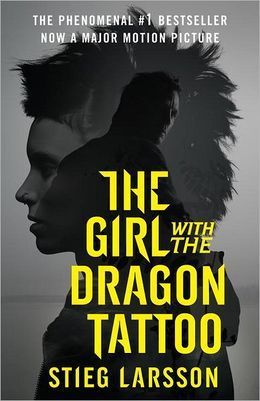

Author: Stieg Larsson [transalted from the Swedish by Reg Keeland]

Publisher: Maclehose Press [Paperback]

First Published: 2005

Summary: A murder mystery, family saga, love story, and a tale of financial intrigue wrapped into one satisfyingly complex and entertainingly atmospheric novel. Harriet Vanger, scion of one of Sweden's wealthiest families, disappeared over forty years ago. All these years later, her aged uncle continues to seek the truth. He hires Mikael Blomkvist, a crusading journalist recently trapped by a libel conviction, to investigate. He is aided by the pieced and tattooed punk prodigy Lisbeth Salander. Together they tap into a vein of unfathomable iniquity and astonishing corruption.

Review: Honestly, I had absolutely no plans of reading this book in the near future. It so happens I had sneaked off to Flora Fountain (Mumbai's finest second-hand books market) to see if I could get hold of a copy of Murakami's "The Wind-Up Bird Chronicle". After a successful outing (and a lighter pocket), I happened to spot a copy of this book lying in front of a bookstore as I walked back, available for what seems a throwaway price in hindsight. Tempted, I bought it & immediately regretted it, unable to concentrate on reading Bolano anymore. Three days later, I was reading this & I was completely hooked. Kismet? I guess.

I had watched the movie before & I liked it so much that there have been repeat viewings, which meant I was quite familiar with the plot & the characters. Plus this being a possible murder mystery in one aspect, it meant I already knew 'whodunit'. Watching the movie first however has never been much of a hindrance, going by my experiences of reading "Life of Pi" or "Shutter Island" (both are favorites).

Coming to the book, it actually helps that the events of this book are set through a longer frame of time, allowing the tension to rise besides giving most of the Vanger family members (the female ones, especially) as well as Erika Berger flesh, blood & soul - the movie gave them short shrift for all I know. So overall, I'm pleased to say this is the best book I've encountered in the crime/mystery/noir genre since reading Tom Rob Smith's stunning debut novel "Child 44" a couple of years ago.

Kafka on the Shore


Author: Haruki Murakami [translated from the Japanese by Philip Gabriel]

Publisher: Vintage [Paperback]

First Published: 2002

Summary: Kafka on the Shore, a tour de force of metaphysical reality, is powered by two remarkable characters: a teenage boy, Kafka Tamura, who runs away from home either to escape a gruesome oedipal prophecy or to search for his long-missing mother and sister; and an aging simpleton called Nakata, who never recovered from a wartime affliction and now is drawn toward Kafka for reasons that, like the most basic activities of daily life, he cannot fathom. Their odyssey, as mysterious to them as it is to us, is enriched throughout by vivid accomplices and mesmerizing events. Cats and people carry on conversations, a ghostlike pimp employs a Hegel-quoting prostitute, a forest harbors soldiers apparently unaged since World War II, and rainstorms of fish (and worse) fall from the sky. There is a brutal murder, with the identity of both victim and perpetrator a riddle—yet this, along with everything else, is eventually answered, just as the entwined destinies of Kafka and Nakata are gradually revealed, with one escaping his fate entirely and the other given a fresh start on his own.

Review: As a reader for the past 10 years or so, I've read a few books & I think it's natural that one begins to nurture certain conceptions about what a novel could be like at best. And then once in a while, I read something that seems to knock on my forehead & say - well mate, I think everything you've believed till now is wrong & so let me open your mind to all kinds of possibilities. Last year, it was David Mitchell's "Cloud Atlas" which did that to me. Now add "Kafka on the Shore" to this illustrious list.

I don't need to give you the summary in my own words, but I'll give you this - there is something extremely personal about reading "Kafka on the Shore". It so happens that when I expressed my desire to read Murakami for the first time on Twitter (in the quest of recommendations), one guy told me how he was at his wit's end after reading this book. Though I read two books by Murakami before I picked up this one, what he said was always at the back of my mind. When I was singing the praises of this book on Twitter once I was done, this guy asks me, "So, what was it about?" And then when I pondered how best I could present my thoughts, it struck me - there is no one except Murakami himself who could provide a perfect explanation to what this book is all about. His constant refusal to do so means everyone who reads & tries to make sense of it is totally on his/her own & till then, perhaps the best thing we can do to discover the ultimate truth would be to read this again & again & again.

"Kafka on the Shore" is lyrical, addictive, mind-boggling awesomeness. Read it to believe it. Highly recommended.

The Sceptical Patriot


Author: Sidin Vadukut

Publisher: Rupa Publications [Paperback]

First Published: 2014

Summary: India. A land where history, myth and email forwards have come together to create a sense of a glorious past that is awe-inspiring...and also kind of dubious. But that is what happens when your future is uncertain and your present is kind of shitty—it gets embellished until it becomes a totem of greatness and a portent of potential. Sidin Vadukut takes on a complete catalogue of ‘India's Greatest Hits’ and ventures to separate the wheat of fact from the chaff of legend. Did India really invent the zero? Has it truly never invaded a foreign country in over 1,000 years? Did Indians actually invent plastic surgery before those insufferable Europeans? The truth is more interesting—and complicated—than you think.

Review: "The Sceptical Patriot" is very much a book about bias - the biased selves we Indians tend to slip into every time someone famous or not-so-famous says about the supposed achievements of our country, depending on who it is & what has been said. And it is this very bias that often results in a sense of pride that is somewhat misplaced on many occasions - Sidin Vadukut's first work of non-fiction is an exploration into the validity of some of these very instances.

What distinguishes this book from any other book aiming to sift fact from fiction is the author's recounting of past experiences from his life to explain his interest in a particular legend. Or citing anecdotes & analogies to shed more light on his own approach - at times even to counter-question it.

Laced with the trademark wit & humour of the bestselling Dork Trilogy and the much-loved Cubiclenama columns, it is a funny, enjoyable & sensible - if somewhat superficial - book on the Indian outlook towards pop-history. If you're looking for a read that will engage & enlighten your mind, your search ends here.

A Fine Balance


Author: Rohinton Mistry

Publisher: Faber & Faber [Paperback]

First Published: 1995

Summary: The time is 1975. The place is an unnamed city by the sea. The government has just declared a State of Emergency, in whose upheavals four strangers - a spirited widow, a young student uprooted from his idyllic hill station, and two tailors who have fled the caste violence of their native village - will be thrust together, forced to share one cramped apartment and an uncertain future.

As the characters move from distrust to friendship and from friendship to love, A Fine Balance creates an enduring panorama of the human spirit in an inhuman state.

Review: “But rest assured: This tragedy is not a fiction. All is true.”

Words fail me when I try to write about this. Few have written about Bombay & the Emergency era like Mistry has in what is possibly his finest work. Just read it.

Tinker, Tailor, Soldier, Spy


Author: John le Carre

Publisher: Penguin Books [Paperback]

First Published: 1974

Summary: The man he knew as "Control" is dead, and the young Turks who forced him out now run the Circus. But George Smiley isn't quite ready for retirement—especially when a pretty, would-be defector surfaces with a shocking accusation: a Soviet mole has penetrated the highest level of British Intelligence. Relying only on his wits and a small, loyal cadre, Smiley recognizes the hand of Karla—his Moscow Centre nemesis—and sets a trap to catch the traitor.

Review: There have been few books I had wanted to read so desperately as this one. I had watched Tomas Alfredson’s brilliant 2011 film adaptation & even the BBC series starring the legendary Alec McGuiness as Smiley & yet this book did not fail to surprise me as I reached its conclusion. Easily one of John le Carre’s finest Cold War-era works ever.

Alone in Berlin                                                                     


Author: Hans Fallada [translated from the German by Michael Hoffman]

Publisher: Penguin Modern Classics [Paperback]

First Published: 1946

Summary: This masterpiece - by a heroic best-selling writer who saw his life crumble when he wouldn't join the Nazi Party - is based on a true story.

It presents a richly detailed portrait of life in Berlin under the Nazis and tells the sweeping saga of one working-class couple who decides to take a stand when their only son is killed at the front. With nothing but their grief and each other against the awesome power of the Reich, they launch a simple, clandestine resistance campaign that soon has an enraged Gestapo on their trail, and a world of terrified neighbours and cynical snitches ready to turn them in.

In the end, it's more than an edge-of-your-seat thriller, more than a moving romance, even more than literature of the highest order-it's a deeply stirring story of two people standing up for what's right, and each other.

Review: Brilliant, vivid & heart-wrenching portrait of wartime Germany through the eyes of a middle-aged couple trying to honour their dead son’s memory. Highly recommended.

The Upside of Irrationality


Author: Dan Ariely

Publisher: HarperCollins [Paperback]

First Published: 2010

Summary: In his groundbreaking book Predictably Irrational, social scientist Dan Ariely revealed the multiple biases that lead us into making unwise decisions. Now, in The Upside of Irrationality, he exposes the surprising negative and positive effects irrationality can have on our lives. Focusing on our behaviors at work and in relationships, he offers new insights and eye-opening truths about what really motivates us on the job, how one unwise action can become a long-term habit, how we learn to love the ones we're with, and more.

Drawing on the same experimental methods that made Predictably Irrational one of the most talked-about bestsellers of the past few years, Ariely uses data from his own original and entertaining experiments to draw arresting conclusions about how and why we behave the way we do. From our office attitudes, to our romantic relationships, to our search for purpose in life, Ariely explains how to break through our negative patterns of thought and behavior to make better decisions. The Upside of Irrationality will change the way we see ourselves at work and at home and cast our irrational behaviors in a more nuanced light.

Review: Remains one of the most insightful, deftly-written & undeniably brilliant books I’ve come across this year. This is the kind of book that causes a paradigm shift in the way you look at the world & I cannot recommend it highly enough.

So there we have it – the ten best books I have read all year. But like every other time, the best-of list is never enough, is it? Here are some more books that deserve a special mention –

The Siege by Adrian Levy and Cathy Scott-Clark

A top-notch work of investigative reportage into how 26/11 unfolded.

Ghalib Danger by Neeraj Pandey

A proper Bollywood-style thriller by one of the most promising & original storytellers in contemporary Hindi cinema.

The Great Unknown by Sankar [translated from the Bengali by Soma Das]

Chowringhee” might be the writer’s most renowned work but the first book in the Shankar trilogy captivated me far more.

The Stand by Stephen King

Would’ve made the top ten list if not for its rather unconvincing ending. Still, King’s magnum opus.

Flash Boys by Michael Lewis

A David versus Goliath tale in the backdrop of Wall Street.

The Lincoln Lawyer by Michael Connelly

An exquisite page-turner & a fine introduction to ace lawyer Mickey Haller.

Teresa’s Man and Other Stories from Goa by Damodar Mauzo [translated from the Konkani by Xavier Cota]

A beautiful collection of short fiction that deserves a wider readership than it probably will get.

And that’s it! Thank you for bearing with me all this while & I hope you enjoy all these books as much as I did, if not more. Here’s to hoping that 2015 will be a much more fruitful year in terms of reading – for the joys of literature lie in reading not more but better books.

Happy Reading! And a Happy New Year!


That’s All, Folks!

Sunday, May 11, 2014

Short Story Gone Long: Kafka on the Floor

Note: Before you start to read this story, let me say what follows is an act of self-indulgence. Like my previous attempt at writing fiction, this is long. As in, looooooooonnnnnnng. Some of it is autobiographical, some of it is made up & some of it is a mix of both. That being said, the idea behind it was deliberately given free rein & so maybe the length got a bit out of hand. But I've tried to put a bit of heart into this & I hope you find it too.


First there was just me. And then there was Kafka.

Maa has never been much of an animal lover, but she does love birds. I know that for a fact because since the time I was a kid, I was used to hearing my name called out from the balcony just when I was about to lose myself in a book. Now it so happens that this banyan tree right across the yard was the abode of many birds, such as black and white cormorants (two different species of the same bird, mind you), cranes, the common ones like crows, magpies, nightingales and mynahs as also the occasional screeching-but-never-too-visible parrot. At first, it felt irritating to be made to rush from one end of the flat to another just to 'appreciate the gifts of nature' but over time I have come to develop a grudging affection for the flying species.

This balcony is also the site of another of Maa's passions - gardening. Incidentally, this was exactly where we made the acquaintance of Kafka.

To water her plants everyday, she filled this small bucket and poured water onto those green beings and whatever was left of it after they had had their fill, she poured it into this small plastic bowl which was occasionally used to keep those tiny crystals of manure she bought from the nursery.

So one fine day, I remember hearing the sound of footsteps getting louder as if coming towards my room (the kind when someone's walking quickly and trying not to make a lot of noise) and before I could turn my head to see who or what it was, Maa comes rushing in & says, "Get up, quick! I have something to show you. The other balcony, now!"

I hurry behind her and just when I'm about to walk into the balcony past her standing near the doorway,, she grabbed my hand and pulled me back before whispering into my ears, "Look at the bowl!"

And then I saw it. A crow perched on the marble slab of the balcony wall with its back towards us, plucking some water out of the bowl with a quick nip (or dip, whatever it did with its beak) and then raising its head as if looking at the sky, as the water slipped down its throat into his bowels.

Now imagine my predicament at that very moment - I had been made to get up to come watch a crow quenching its thirst just as Jane Eyre was about to go on that walk with Mr. Rochester and romantic tensions between the two were simmering like anything. Disappointed big time, I walked back to my book without offering any comment, fearing saying what I really felt would provoke an unnecessary argument and hurt her feelings. Unaware of this, she followed me into my room and said, "It would be quite nice if birds come to our balcony like that, wouldn't it? Like people feeding the pigeons." I nodded of sorts and eager to get back to Jane Eyre I remarked, "Maybe he could be your version of Kakeshwar Kuchkuchey or my version of Speedy."

Before I proceed with the story, a bit of digression into the lives of Kakeshwar and Speedy. Both happen to be fictional characters and unconsciously the reason for the affection Maa and I have for crows. Kakeshwar Kuchkuchey, in Maa's words, is the "clever, calculating and cunning crow" from the Bengali short story "Hajabarala", Sukumar Ray's classic tale filled with absurdist humour. (Maa always seemed to used those three adjectives to describe KK. I learnt much later in school it was a figure of speech. Which one? Go figure.) And Speedy is the protagonist of Ruskin Bond's short story "A Crow For All Seasons", a hilarious one about a crow who lives on a tree at the edge of an Anglo-Indian family's house.

Getting back to the story, Maa decided to keep two bowls filled with water instead of one, perhaps to attract more crows to our balcony. The next day, however, we had no crows in our balcony. Unfortunately for Maa, I thought, she might have overestimated the crow's intellect based on her experiences with fiction.

But the day after, it was there again. I was going to the balcony when I saw it standing on the marble slab, having a drink. And the crow is a pretty fearless creature - it was aware of my presence (it seemed to look at me, so) and it didn't even blink an eye and fly (atleast I thought so) through the grill until I had gotten really close to it.

I went into the kitchen to find Maa and tell her about the crow. Her face seemed to light up as she heard this and she replied, "Well, we better choose a name for him now that he's started to come regularly." Seriously? It had not been two days in a row that the crow had been coming and here we are, deciding to have a name for him. Maa relented a bit but was in no way affected by what I felt. She said, "Well, if he comes tomorrow to drink water from the bowl, we will do the naamkaran. What say?" Fine, I said. So be it.

I wondered if Maa would place a third bowl of water alongside the two already there, as an extra incentive of sorts. It also made me wonder why she was doing all this for the sake of some crow who happened to drop in twice to have a sip. Now that I think about it, I was a bit too young to understand the phenomenon of 'bringing out the child in someone'. How could a child bring out a child in himself, after all? But now that I have grown up a bit, I have learnt is that whenever you see an otherwise perfectly normal adult doing something out of the ordinary, we should not judge them for it and instead just let them be, soaking in some unadulterated happiness in the unusually dull lives they often lead.

Coming back to the crow, I don't know why but I was half-hoping it would come the next day, maybe to liven things up a bit. But the whole day passed, we waited and it didn't seem to come. And then, as the sun was about to set upon this part of the world, surprise - it was back. As if he had heeded what Maa had said earlier and raised the suspense quotient a bit before making his appearance and cawing, "Yo buggers, here I am, eh? Cheerio."

Thanks to the crow's dramatic last-minute cameo that evening, I had to half-heartedly take part in the enticing activity of naming the crow. Maa wanted to name it KK (in short for you-know-what) and I too made a show of being interested, turning down her suggestion out of hand. I didn't want to call him Speedy since the crow obviously had none of Speedy's awesomeness, atleast until that point. I thought of the Thirsty Crow - the one from the age-old fable - but calling it Thirsty seemed inconvenient and I didn't dare to suggest it. Too bad I didn't have an internet connection back then, otherwise I would have just turned to Google. Not that crow names are similar to baby names, anyway.

And the solution was found in - guess what - fiction. At that time, I was reading this really weird book by some Japanese author with a fancy name which had a teenager running away from home, talking cats, fish raining out of the sky and what not. Now there was this bit in which the teenager I mentioned renames himself as Kafka, who I remember reading as some weird European guy who wrote weird stories. All in all, Kafka also means 'crow' in Czech (atleast the book claimed that) and I told Maa about this, who seemed happy enough to see I was interested. So that's how the crow came to be called Kafka.

The odd thing is that both Maa and I here assumed that the crow was male. How does one tell, anyway? And given how things are in today's world, would that be termed sexist?

By the time the crow dropping in for his daily fill everyday, I once found one of those tiny marble balls on the way back from school and not knowing where to put it, I dropped it into one of the water-filled bowls and forgot all about it till that evening, only to discover that the ball had vanished. I asked Maa if she had seen it but she claimed to have no knowledge of it and even admonished me for picking up things off the road just like that. I was about to don Sherlock's hat to investigate the Case of the Missing Marble when Maa suggested, "Maybe the crow took it." How was that possible, I asked. He was there in the afternoon and she saw him, she said. As if she recognized him, I mildly sneered not knowing what to say. But she did, she would tell me some other day when I was not being upset. What nonsense, I thought. But whatever had happened with Kafka so far, everything had felt quite extraordinary.

The following day, I come home from school only to find my marble ball, but in the other bowl - not the one I had dropped it into the day before. I put it back where I had originally put it, thinking if Kafka would be interested in playing games. But nothing actually happened and the ball remained right there. Maa proposed a theory that Kafka might have thought it to be something edible but having found it hard to crack, had been honest enough to return it the next day. She thinks as if I'm still as gullible as a four-year-old, I thought. However, for want of a better theory, the case was closed.

As much as Maa seemed to love Kafka, things were not rosy all the time. Two instances come to mind here when Maa got really pissed at that crow of ours. The first time was when I came home to see Maa sitting, looking a bit sad, a bit angry. I asked her what the matter was and I could see she was seething as she said, "That crow! I give that darned creature enough water to drink and he goes on to destroy another bird's nest." What had actually transpired was that the crow had actually ransacked a tailor bird's nest on the almond tree that grows a few feet away from our balcony in search of eggs and Maa had even tried to stop the crow from doing so by throwing stones at it even as the helpless tailor-bird could only sound a never-ending distress call on a distant branch. I tried to imagine what it would look like Maa stoning a crow she seemed to love only till yesterday when she said, "Enough of that crow. No more water for him from now on." How do you even know it was him, I queried. Pat came the retort, "I don't know how my son turned out to be like this? You see, but you do not observe. Can't you see that streak of grey right at the top of his black head? Like the one Aamir did in that film in which he was bald. See for yourself if that crow comes again. Not that I am gonna be good to him anymore."

For the next couple of days, Kafka came, Kafka saw, but Kafka did not conquer. But I did manage to see what I wanted to - Kafka did have a bit of the Ghajini-hairstyle on his head. The lonely marble ball lay in the middle of the empty bowl, as if it were the only remains of a dried-up oasis. On the third day, however, I saw Maa filling those two bowls, pouring water from the bucket. So you do have a heart, I attempted a wise crack at the situation. She turned towards me and her grim face instantly made me want to take my words back, but all she said was "Nature is harsh. Doesn't mean we have to be as well all the time." It took me some time to register what she had said that day.

The other time didn't escalate to proportions like the time before, but Kafka had probably decided he felt at home enough to shit on the floor of the balcony. The first time he did it, Maa grudgingly let it pass. But when Kafka emptied his bowels again on the floor in a couple of days, Maa went back to her boycott of the water bowl. This time, it lasted just one day. Kafka never shit on the floor again for what seemed a long time.

Days passed. And then arrived that one time, which was the defining moment of my relation with Kafka. He was perched on the balcony grill - half his body inside, half of it outside - and having his fill when I decided to have some fun. I had this bottle of water fitted with a spray on top of it, the kind you see on Colin Spray bottles. As he was absorbed in his drink, I appeared suddenly in the doorway (like those good ol' Bollywood villains) and sprayed water right into his face. And what played out in the next few seconds still seem as if it were right out of some movie scene, everything in slow motion.

Startled, Kafka tried to escape but in his bid to do so, he struck the back of his head against a part of the metal grill and I thought I heard something crack and he fell straight down into the ground. For a few moments, I stood right where I was, dumbstruck. Then the real world came rushing back to me and I rushed to the grill, trying to see the fallen crow. Nothing. Maa not being at home, I rushed down from our first floor flat to the spot where his fall should've been broken by the concrete surface. No sign was visible, it being a hard surface.

I was never much of a biology person but as I stood there below, I remembered studying that birds did not have anything in their bodies that resembled a vertebrae. Or did they? No, they didn't. And then when I looked up at my balcony, I saw a crow on a branch of the almond tree out of the corner of my eye. Surely that was not Kafka? There was only one way to find out. And so to get a better view of that head, I ran back to my balcony.

But it was gone by the time I got up there. Had I really heard that cracking noise, or had it been a figment of my imagination, thanks to pop culture? Was Kafka really gone?

A week passed and there had been no sign of Kafka yet. I had not dared to tell her what I had done fearing her reaction wouldn't exactly help matters, but she didn't really look that upset when I asked her about him a couple of days after the incident. "It's a bird after all, it might have gone off somewhere," was all she said.

I was reading in the room adjoining the balcony when I thought I heard something hit the grill - a flap of wings perhaps? I went into the balcony and everything seemed in its place except...the marble ball. It was no longer in the bowl it had been for an eternity. It was instead in the other bowl. And then I heard him.

It had come from the upper echelons of the almond tree, I was sure. I went up to the balcony wall and craned my neck as much as I could to see the top when I realised there was something beneath my right foot. Looking down, I saw thin strands of a sticky white liquid with a black not-so-solid substance clinging to my heel. That goddamned bird, I thought.

As I walked to the bathroom on mostly one leg trying to avoid leaving footprints of bird shit on the clean floor, I couldn't help but allow myself a big, wide, foolish grin on my face. Had it really been Kafka's call? Or had I imagined it all? I didn't care anymore.

For that one moment, there was just me. And there was Kafka on the Floor.

Monday, December 31, 2012

The Ten Best Books I've Read In 2012


There were two things I originally intended to do as far as this post is concerned. I wanted to write this post on Christmas (given I got an unexpected week-long break from college) but I fell ill right on the first day. And secondly, I pondered over including all the great books I’ve read this year rather than a top-10 list but it’s just too much of an effort.
                                               
Now that I’m finally feeling okayish and 2012 isn’t over yet at the time of writing (atleast not in India), I’m gonna write about the ten best books I’ve read this year. This list isn’t like most lists which include books only from the current year (I’m penniless as far as that is concerned, okay?) but this list will include titles that have been published before and much, much before.

So in no particular order, here goes my list of the ten best books I’ve read in 2012 –

Band of Brothers [Pocket Books]


 Author: Stephen E. Ambrose

First Published: 1992

Summary: They came together, citizen soldiers, in the summer of 1942, drawn to Airborne by the $50 monthly bonus and a desire to be better than the other guy. And at its peak -- in Holland and the Ardennes -- Easy Company, 506th Parachute Infantry Regiment, 101st Airborne Divison, U.S. Army, was as good a rifle company as any in the world.

From the rigorous training in Georgia in 1942 to the disbanding in 1945, Stephen Ambrose tells the story of this remarkable company. In combat, the reward for a job well done is the next tough assignment, and as they advanced through Europe, the men of Easy kept getting the tough assignments.

They parachuted into France early D-Day morning and knocked out a battery of four 105 mm cannon looking down Utah Beach; they parachuted into Holland during the Arnhem campaign; they were the Battered Bastards of the Bastion of Bastogne, brought in to hold the line, although surrounded, in the Battle of the Bulge; and then they spearheaded the counteroffensive. Finally, they captured Hitler's Bavarian outpost, his Eagle's Nest at Berchtesgaden.

They were rough-and-ready guys, battered by the Depression, mistrustful and suspicious. They drank too much French wine, looted too many German cameras and watches, and fought too often with other GIs. But in training and combat they learned selflessness and found the closest brotherhood they ever knew. They discovered that in war, men who loved life would give their lives for them.

This is the story of the men who fought, of the martinet they hated who trained them well, and of the captain they loved who led them. E Company was a company of men who went hungry, froze, and died for each other, a company that took 150 percent casualties, a company where the Purple Heart was not a medal -- it was a badge of office.

Review: Okay, I did say this list is in no particular order but this was on top of my list. The book might require a bit of patience at the start but once you are into it, there’s no letting go. A tale of bravery, courage, friendship and brotherhood (as the name suggests) in the midst of adversity and triumph. Look out for the ‘million-dollar-wound’. A MUST READ for those interested in history of the World Wars. I’d recommend it to everyone.

Child 44 [Pocket Books]


Author: Tom Rob Smith

First Published: 2008

Summary: Stalin's Soviet Union strives to be a paradise for its workers, providing for all of their needs. One of its fundamental pillars is that its citizens live free from the fear of ordinary crime and criminals.

But in this society, millions do live in fear . . . of the State. Death is a whisper away. The mere suspicion of ideological disloyalty - owning a book from the decadent West, the wrong word at the wrong time - sends millions of innocents into the Gulags or to their executions. Defending the system from its citizens is the MGB, the State Security Force. And no MGB officer is more courageous, conscientious, or idealistic than Leo Demidov.

A war hero with a beautiful wife, Leo lives in relative luxury in Moscow - even providing a decent apartment for his parents. His only ambition has been to serve his country. For this greater good, he has arrested and interrogated.

Then the impossible happens. A different kind of criminal-a murderer-is on the loose, killing at will. At the same time, Leo finds himself demoted and denounced by his enemies, his world turned upside down, and every belief he's ever held shattered. The only way to save his life and the lives of his family is to uncover this criminal. But in a society that is officially paradise, it's a crime against the State to suggest that a murderer-much less a serial killer-is in their midst. Exiled from his home, with only his wife, Raisa, remaining at his side, Leo must confront the vast resources and reach of the MBG to find and stop a criminal that the State won't admit even exists.

Review: I count myself lucky the day I came across this book in a second-hand bookstore. A fast-paced crime thriller based on real-life events and set in Stalinist Russia, this is an absolute page-turner and its no-nonsense prose from the very start pulls you into the world Tom Rob Smith envisions. This is not just another crime thriller - it provides excellent insight on how difficult and terrifying life was in Soviet Russia during the Cold War. This book is an achievement given it was Smith’s debut novel and it was duly recognized through a host of awards and nominations such as the Man Booker Prize longlist and the winner of the CWA Steel Dagger, to name a few. I recommend this as a MUST READ for everyone, especially for fans of crime fiction.

(‘Child 44’ is the first instalment of the Leo Demidov trilogy and it is followed by two acclaimed instalments – ‘The Secret Speech’ and ‘Agent 6’.)

Schindler’s Ark [Sceptre]


Author: Thomas Keneally

First Published: 1982

Summary: In the shadow of Auschwitz, a flamboyant German industrialist grew into a living legend to the Jews of Cracow. He was a womaniser and heavy drinker who enjoyed the good life, yet to them he became a saviour.

Thomas Keneally's Booker Prize-winning novel recreates the story of Oskar Schindler, an Aryan who risked his life to protect Jews in Nazi-occupied Poland, who continually defied and outwitted the SS, and who was transformed by the war into an angel of mercy. It is an unforgettable tale, all the more extraordinary for being true.

Review: This is one of those few books that moved me to tears quite a number of times. An extraordinary book that was the result of the efforts of Poldek Pfefferberg, a Schindler survivor, who made it his life’s mission to ensure that Oskar Schindler’s story did not remain untold. Thomas Keneally traces the story of Schindler with the backdrop of Germany during WWII and does it brilliantly. Filled with horrifying incidents of cruelty as well as endearing moments of kindness, this book is a masterpiece and will stay with you for a long time. A MUST READ for readers across all genres.

Nineteen Eighty-Four [Jainco Publishers]


Author: George Orwell

First Published: 1949

Summary: Hidden away in the Record Department of the sprawling Ministry of Truth, Winston Smith skilfully rewrites the past to suit the needs of the Party. Yet he inwardly rebels against the totalitarian world he lives in, which demands absolute obedience and controls him through the all-seeing telescreens and the watchful eye of Big Brother, symbolic head of the Party. In his longing for truth and liberty, Smith begins a secret love affair with a fellow-worker Julia, but soon discovers the true price of freedom is betrayal.

Written in 1948, 1984 was George Orwell's chilling prophecy about the future. And while the year 1984 has come and gone, Orwell's narrative is timelier than ever. 1984 presents a startling and haunting vision of the world, so powerful that it is completely convincing from start to finish. No one can deny the power of this novel, its hold on the imaginations of multiple generations of readers, or the resiliency of its admonitions. A legacy that seems only to grow with the passage of time.

Review: I’ve read only two of George Orwell’s works – the other one being his memoir ‘Down and Out in Paris and London’. And he’s already one of my all-time favourite novelists. Orwell gives us a vivid picture of what ‘hell on earth’ would look like in this terrifying dystopian science fiction novel. The technologies described are synchronous with quite a number of the ones seen in today’s world and many words used in this novel have found their place in English vocabulary. ‘Nineteen Eighty-Four’ is a book that will remain a great work of modern literature for generations to come.

To Kill A Mockingbird [Mass Market Paperback]


Author: Harper Lee

First Published: 1960

Summary: The unforgettable novel of a childhood in a sleepy Southern town and the crisis of conscience that rocked it. To Kill A Mockingbird became both an instant bestseller and a critical success when it was first published in 1960. It went on to win the Pulitzer Prize in 1961 and was later made into an Academy Award-winning film, also a classic.

Compassionate, dramatic, and deeply moving, To Kill A Mockingbird takes readers to the roots of human behavior—to innocence and experience, kindness and cruelty, love and hatred, humor and pathos. Now with over 18 million copies in print and translated into forty languages, this regional story, by a young Alabama woman, claims universal appeal. Harper Lee always considered her book to be a simple love story. Today it is regarded as a masterpiece of American literature.

Review: Not much remains to be said about this book. This is another one that made me numb. A book full of unforgettable characters and a narrative that makes you question whether the goodness in human beings can inspire social change or not. A timeless classic that again falls into the MUST READ category and transcends readers across all genres.

Inverting the Pyramid [Orion Books]


Author: Jonathan Wilson

First Published: 2008

Summary: For soccer fans, following, discussing, and arguing about the tactics a manager puts into play are part of what makes the sport so appealing. This fascinating study traces the history of soccer tactics back from such modern pioneers as Rinus Michels, Valeriy Lobanovskyi, Catenaccio, and Herbert Chapman. Along the way, author Jonathan Wilson, an erudite and detailed writer who never loses a sense of the grand narrative sweep, takes a look at the lives of the great players and thinkers who shaped the game, and discovers why the English in particular have proved themselves so "unwilling to grapple with the abstract." This will be a modern classic of soccer writing that followers of the game will dip into again and again.

Review: This is a book for those looking for something far more intellectual than reading one of those footballers’ ghost-written autobiographies that are churned with alarming regularity every year. Jonathan Wilson’s masterpiece of football literature gives us a detailed account of the evolution of tactics and provides valuable insight on how and why some teams have continued to play a certain style of football over decades. A MUST READ for all football fans.

Manchester United: The Biography [Sphere]


Author: Jim White

First Published: 2008

Summary: Following the club’s extraordinary journey from its birth in the railway works of Newton Heath to its current status as the biggest club in world soccer, this is a fascinating history of a remarkable team. The key stages in Manchester United’s history are covered: the Munich Air Crash of 1958, which saw the best part of an entire team (the Busby Babes) being killed; becoming the first English team to win the European Cup in 1968 (with Bobby Charlton and George Best); the dominance of the club in the Premiership; the controversial sale to American tycoon Malcolm Glazer; right up to Moscow 2008. By drawing on the recollections of everyone from players and managers to fans and backroom staff, enough new material has been unearthed to interest fans and casual supporters.

Review: There are Manchester United fans who take more interest in reading every autobiography of Wayne Rooney but prefer to remain blissfully unaware of the history of the club they support. Jim White does a spectacular retelling of the history of Manchester United Football Club like a fan (yes, a fan) possessed and gives us a book that every Manchester United fan across the globe will cherish for the rest of his life.

The Curious Incident of the Dog in the Night-Time [Vintage]


Author: Mark Haddon

First Published: 2003

Summary: The Curious Incident of the Dog in the Night-time is a murder mystery novel like no other. The detective, and narrator, is Christopher Boone. Christopher is fifteen and has Asperger's Syndrome. He knows a very great deal about maths and very little about human beings. He loves lists, patterns and the truth. He hates the colours yellow and brown and being touched. He has never gone further than the end of the road on his own, but when he finds a neighbour's dog murdered he sets out on a terrifying journey which will turn his whole world upside down.

This improbable story of Christopher's quest to investigate the suspicious death of a neighborhood dog makes for one of the most captivating, unusual, and widely heralded novels in recent years.

Review: The book’s most unique aspect is the narrative – it’s exactly how you would imagine a teenager with Asperger’s Syndrome. Christopher Boone endears himself to you over the course of the book and the prose ensures that the book is never too difficult to read. This book won the Whitbread Novel of the Year and a nomination on the Booker longlist among others and to sum it up, it’s a children’s book not for children.

Inside Steve’s Brain [Portfolio]


Author: Leander Kahney

First Published: 2008

Summary: Steve Jobs has turned his personality traits into a business philosophy. Here is how he does it.

It’s hard to believe that one man revolutionized computers in the 1970s and ‘80s (with the Apple II and the Mac), animated movies in the 1990s (with Pixar), and digital music in the 2000s (with the iPod and iTunes). No wonder some people worship him like a god. On the other hand, stories of his epic tantrums and general bad behavior are legendary.

Inside Steve’s Brain cuts through the cult of personality that surrounds Jobs to unearth the secrets to his unbelievable results. It reveals the real Steve Jobs - not his heart or his famous temper, but his mind. So what’s really inside Steve’s brain? According to Leander Kahney, who has covered Jobs since the early 1990s, it’s a fascinating bundle of contradictions.

Jobs is an elitist who thinks most people are bozos but he makes gadgets so easy to use, a bozo can master them.

He’s a mercurial obsessive with a filthy temper but he forges deep partnerships with creative geniuses like Steve Wozniak, Jonathan Ive, and John Lasseter.

He’s a Buddhist and anti-materialist but he produces mass-market products in Asian factories, and he promotes them with absolute mastery of the crassest medium, advertising.

In short, Jobs has embraced the traits that some consider flaws - narcissism, perfectionism, the desire for total control to lead Apple and Pixar to triumph against steep odds. And in the process, he has become a self-made billionaire.

In Inside Steve’s Brain, Kahney distills the principles that guide Jobs as he launches killer products, attracts fanatically loyal customers, and manages some of the world’s most powerful brands.

The result is this unique book about Steve Jobs that is part biography and part leadership guide, and impossible to put down. It gives you a peek inside Steve’s brain, and might even teach you something about how to build your own culture of innovation.

Review: I was initially not hoping too much for this book, having gone looking for Steve Jobs’ official biography or ‘i-Con’ at the annual Strand Book Fair. As luck would have it, both were sold out by the time I got there and so I settled for this book. And what a pleasant surprise this book proved to be! Leander Kahney dissects every chapter in the life of Jobs the entrepreneur with aplomb. The best thing about this book is that you don’t need to make notes while you’re reading or done with it – there is a comprehensive section dedicated to that after every chapter. Apple fans and those who wish to understand the marketing genius of Steve Jobs – this is the book for you.

About A Boy [Penguin Books]


Author: Nick Hornby

First Published: 1998

Summary: Will is thirty-six, comfortable and child-free. And he's discovered a brilliant new way of meeting women - through single-parent groups. Marcus is twelve and a little bit nerdish: he's got the kind of mother who made him listen to Joni Mitchell rather than Nirvana. Perhaps they can help each other out a little bit, and both can start to act their age.

Review: Most fans of Nick Hornby’s novels will claim his first novel ‘High Fidelity’ was his best but I rate ‘About A Boy’ higher. ‘High Fidelity’ was a story of extremes (no complaints) but ‘About A Boy’ is a much more refined novel in many ways – the characters, the relationships and the manner in which Hornby makes this novel work is astounding to say the least. A light-hearted novel that will make you laugh out with its irrepressible humour, awkward situations and characters you just can’t stop loving.

So that’s the ten best books I discovered this year. But hey, that’s not all! There were quite a few more that deserve a mention alongwith the aforementioned books and they are as under:

The Damned United by David Peace

A brilliant ‘factional’ account of Brian Clough’s ill-fated reign at Leeds United that lasted 44 days.

The Constant Gardener and Absolute Friends by John le Carre

The first is a political thriller so unlike John le Carre’s earlier novels while the latter is vintage stuff.

The Catcher in the Rye by J.D. Salinger

One of the funniest books I’ve read in my life. Would’ve enjoyed it much more had I read this some five years ago when I was still a teenager.

Shutter Island and Mystic River by Dennis Lehane

Both books are engaging and absolute page-turners. For those who love suspense and American noir.

Serious: The Autobiography by John McEnroe

A cracking read about the life of tennis legend John McEnroe that gets better with every page you read.


That's all Folks!

Wishing you a very Happy and Prosperous New Year 2013!